
Many pet owners, when buying a cage for the first time, focus on only three things: size, price, and whether it can fit the pet.
But after actually using it, they realize that the cage material directly affects the pet’s comfort, sense of security, cleaning difficulty, and even whether it makes noise at night, whether it feels cold in winter, and whether the home ends up looking like a storage room.
Wooden pet cages have become more popular in recent years. It is not just “wood nostalgia,” and it is not only about looks. Wooden cages do have real advantages in insulation, quietness, and blending into the home. But wooden cages are not the universal answer. Metal cages and plastic cages also have irreplaceable use cases.
The conclusion first: there is no absolutely best material, only a material that is more suitable for your pet and your lifestyle.
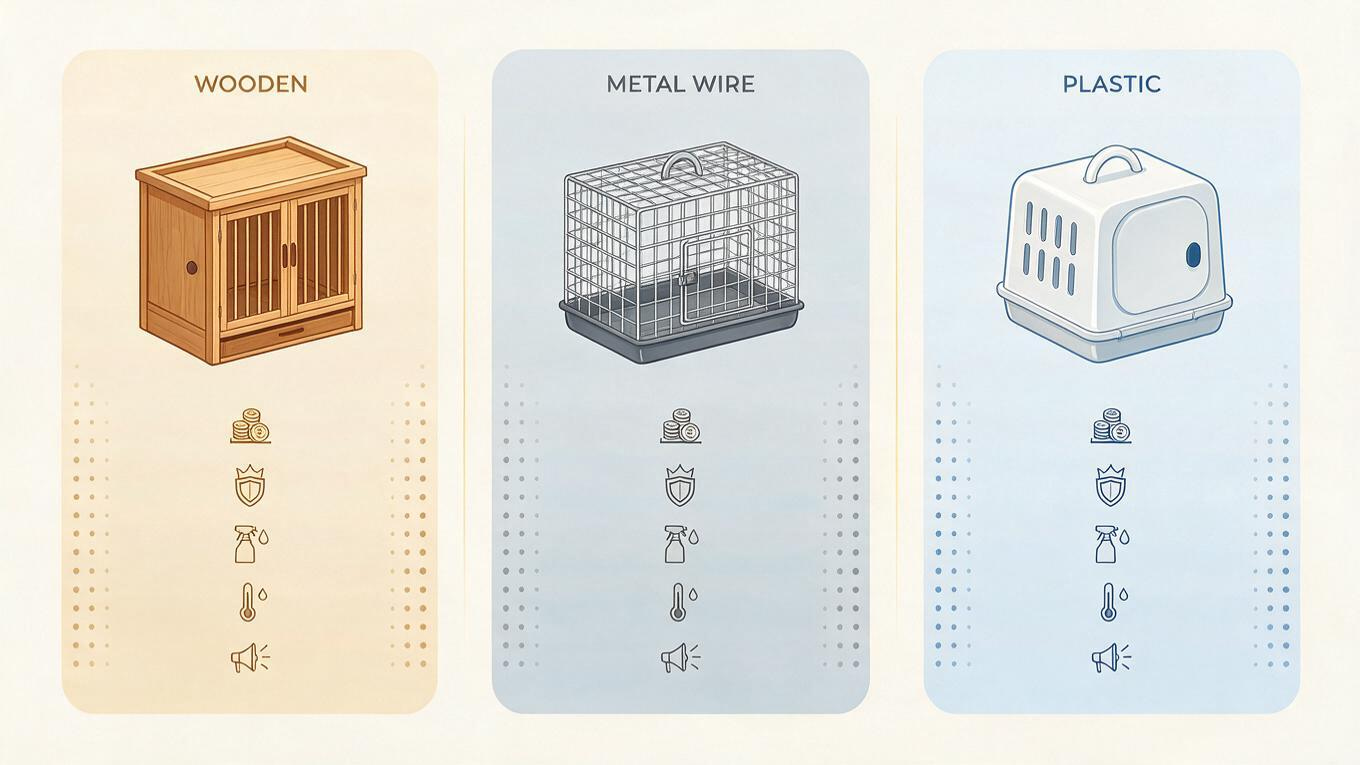
If you care about insulation, quietness, aesthetics, and a long-term sense of companionship, a wooden cage is worth considering. If you care more about easy cleaning, ventilation, and durability, a metal cage may be better. If your budget is limited, you need temporary housing, or you have a small pet, a plastic cage also has its place.
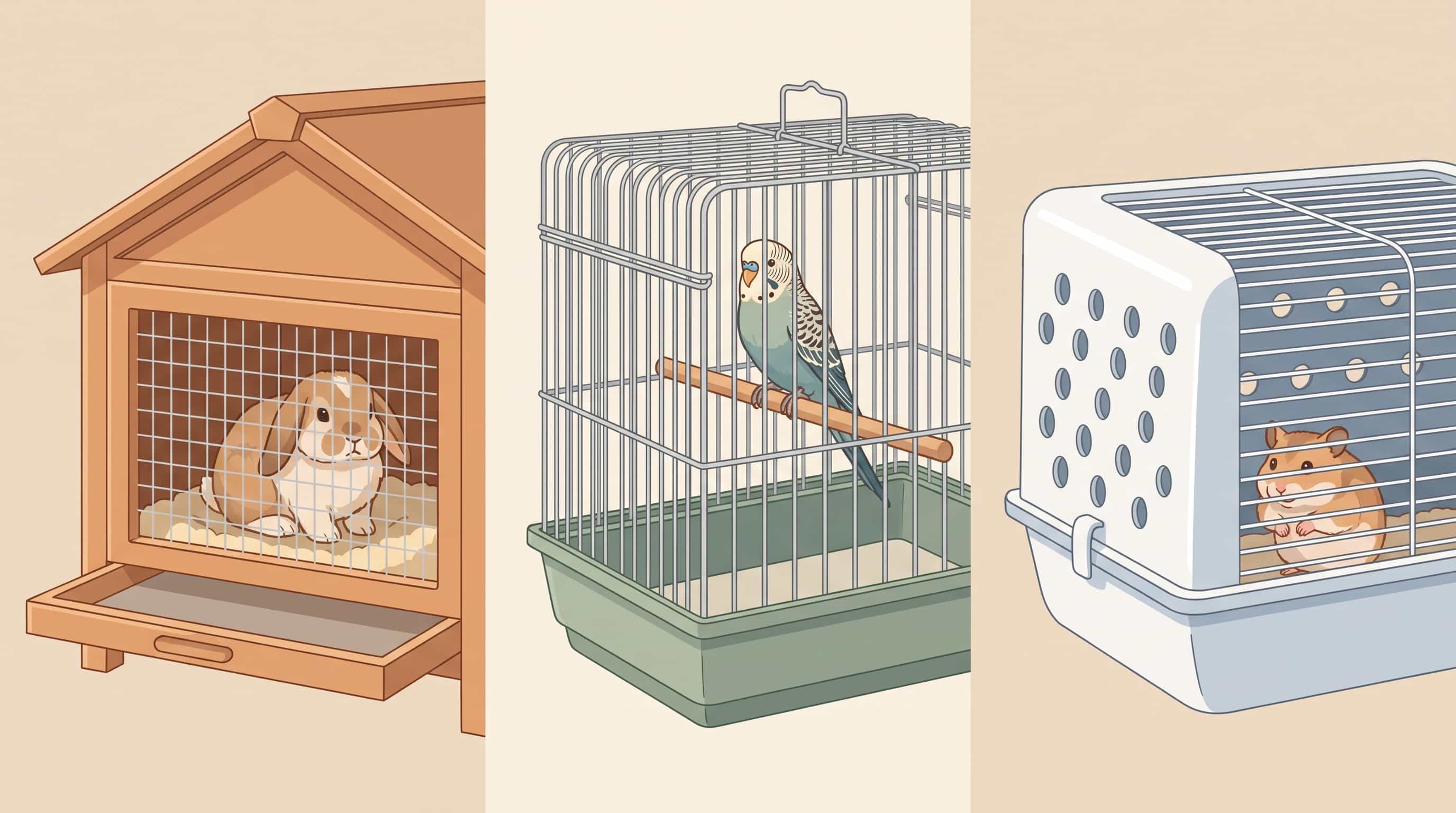
| Comparison Dimension | Wooden Cage | Metal Cage | Plastic Cage |
|---|---|---|---|
| Insulation | Good; wood conducts heat slowly, so it does not feel icy in winter | Poor; conducts heat quickly, cold in winter and hot in summer | Medium, but can become stuffy if ventilation is poor |
| Noise | Lower; wood absorbs sound and reduces vibration | Higher; chewing, jumping, and movement easily resonate | Medium-low, but the cage body is light and may shift |
| Safety | Depends on wood, paint, and anti-chew design | Chew-resistant, but may pinch paws, rust, or chip paint | No sharp corners, but can be chewed into pieces and swallowed |
| Cleaning Difficulty | Harder; needs a tray and waterproof liner | Easiest to rinse | Easy to wipe, but gaps trap dirt |
| Aesthetics | High; looks more like furniture | Industrial and functional | Lightweight but can look cheap |
| Price | Medium-high; custom models cost more | Medium | Low |
| Durability | Depends on wood; sensitive to moisture and chewing; repairable | High, but may rust | Ages and becomes brittle |
| Ventilation | Requires good design | Best | Usually poor |
| Suitable Scenarios | Rabbits, chinchillas, guinea pigs, parrots, indoor cats, etc. | Dogs, cats, large parrots, destructive pets | Hamsters, temporary housing, transport |
First, insulation.
Metal conducts heat quickly. It feels cold in winter, and if it is exposed to the sun in summer, it can become hot. Plastic has some insulation, but if the ventilation design is poor, the inside can become stuffy. Wood conducts heat relatively slowly and feels gentler to the touch. For pets that are sensitive to cold, such as rabbits, chinchillas, guinea pigs, and parrots, a wooden cage is usually more comfortable.
But note: good insulation does not mean the cage can be sealed tight. Ventilation holes, mesh panels, and airflow design are essential. Otherwise, insulation becomes stuffiness, which can be dangerous.
Now, noise.
One of the biggest problems with metal cages is resonance. When pets chew, jump, or scratch at night, metal wires and trays amplify the sound. Because wood itself absorbs sound and reduces vibration, the overall sound from a wooden cage is usually softer and quieter. For nocturnal pets, or for sound-sensitive households, this is very practical.

Are wooden cages safe?
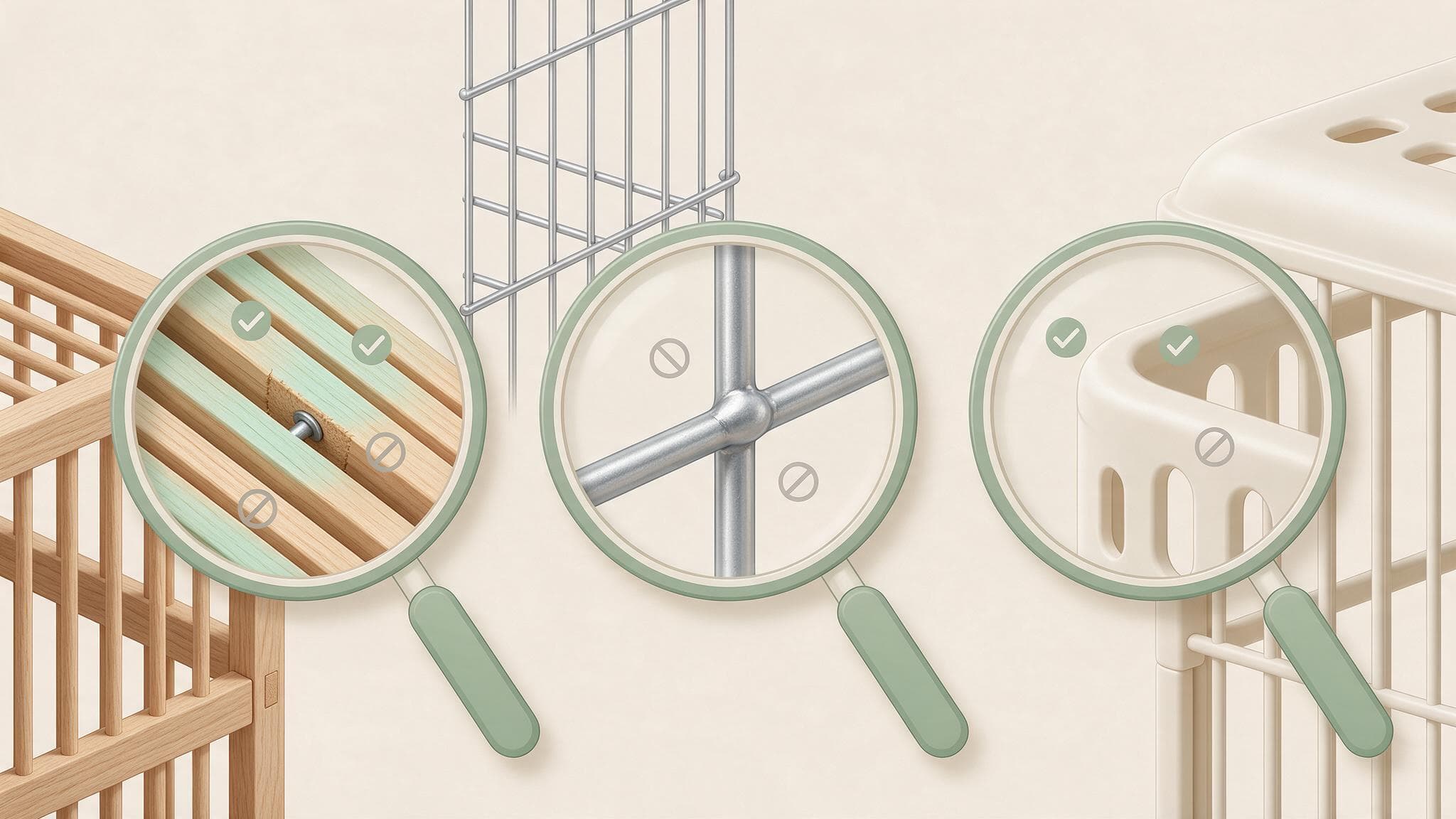
The answer is: a wooden cage can be very safe, but only if the wood, paint, and structure are chosen correctly.
If the wood has a pungent smell, uses low-quality paint, has exposed nails, or the pet is a heavy chewer, a wooden cage can also become a risk. For rodents especially, avoid untreated pine, cedar, and other woods that may irritate the respiratory tract. Safer choices include hardwoods such as birch, poplar, and maple, with pet-safe water-based paint, or no paint at all.
The advantage of metal cages is chew resistance, but details still matter. Rough welds, wire gaps, chipped paint, rust, and trays that pinch paws can all hurt a pet. Plastic cages look rounded, but when chewed into pieces, they can be swallowed, and ventilation holes can trap small toes.
So safety is not “wood is definitely safe” or “metal is definitely safe.” It is:
Are there exposed nails? Is there eco-friendly paint? Can the door be opened by the pet? Can the bottom tray pinch paws? Will the pet chew and swallow pieces?
If cleaning is your biggest concern, metal cages are usually the easiest. They can be rinsed directly and dried, and they do not easily absorb odors. Plastic cages are also easy to wipe, but urine stains and dirt can remain in the gaps.
Wooden cages are indeed harder to clean because they are sensitive to moisture and urine. But this does not mean a wooden cage must be dirty or smelly. The key lies in the design:
Is there a pull-out tray?
Is the bottom panel waterproof?
Is there urine protection in the corners?
Can you use pee pads, wood shavings, or eco-friendly bedding?
Will the food bowl and water bottle wet the wood?
If a wooden cage has a waterproof liner and a pull-out tray, daily cleaning is not much harder than with a metal cage. But if the pet urinates a lot or likes to spray, a metal cage with a tray will be easier.
In one sentence: a wooden cage is not impossible to clean; what you should not buy is a wooden cage with “looks only, no cleaning design.”

This is the most obvious advantage of wooden cages.
Metal cages look like functional equipment. Plastic cages look like temporary supplies. Wooden cages blend more easily into Scandinavian, Japanese, modern minimalist, and natural wood-style homes. They can look like a side cabinet, a room divider, a nightstand, or even part of the living room.
For families living with pets, this matters a lot. The cage is no longer just “a place to keep the pet.” It becomes a piece of furniture in the home. When the pet stays in the living room, the owner is also more willing to interact with it, instead of hiding the cage in a corner of the balcony.
Of course, aesthetics cannot come at the cost of ventilation, cleaning, and size. A wooden cage that looks good but is stuffy, hard to clean, and too small for the pet to stretch out is still not a good cage.

Plastic cages are the cheapest, but they age easily, can be chewed, and may need to be replaced quickly.
Metal cages are medium-priced and fairly durable, but they may rust, chip paint, and be noisy.
Wooden cages usually cost more, and custom models cost even more, but they are repairable, have replaceable parts, and offer better insulation, quietness, and aesthetics.
So do not compare only “how much it costs when you buy it.” Also calculate:
How long will it last?
Is it easy to clean?
Will it be noisy?
Will the pet need extra warmth in winter?
Can it be repaired if damaged?
Will you want to hide it when it is in your home?
If you plan to keep pets for the long term and want the cage to blend into your living space, the long-term experience of a wooden cage is often worth it. If you only need temporary use and have a limited budget, plastic and metal cages are more practical.
Pets that are more suitable for wooden cages:
Rabbits, chinchillas, guinea pigs, parrots, some indoor cats, etc. They usually need a warm, quiet, and secure resting space, and wooden cages make this easier to achieve.
Pets that are more suitable for metal cages:
Dogs, cats, large parrots, destructive pets, and pets that urinate a lot. Metal cages have good ventilation, are easy to clean, and are durable. The downsides are noise and coldness in winter.
Scenarios that are more suitable for plastic cages:
Hamsters, temporary housing, transport, limited budgets, and small spaces. Plastic cages are light and cheap, but they are not suitable for long-term closed housing, and you must prevent chewing and swallowing.
Hybrid solutions are also highly recommended:
Wooden exterior + metal tray + plastic base. This keeps the home-friendly look while improving cleaning and durability.
Wood: Prefer hardwoods such as birch, poplar, and maple. Avoid low-quality pine, cedar, and pungent woods.
Paint: Choose pet-safe water-based paint or no paint. It should not smell pungent.
Ventilation: At least two sides should have ventilation. Do not make it airtight just for insulation.
Bottom: Pull-out tray + waterproof liner, preferably removable and washable.
Hardware: No exposed nails, escape-proof door locks, and rounded corners.
Size: The pet should be able to stand, turn around, stretch, and jump. It should not be “just barely fit.”
Repairability: Chewed door bars, bottom panels, and trays should be replaceable separately.
Why are wooden pet cages worth choosing?
Because they usually have advantages over metal and plastic in insulation, quietness, aesthetics, sense of security, and home integration.
But they are not universal cages. For pets that urinate a lot, are highly destructive, or need extremely strong ventilation, metal cages may be more suitable. If the budget is limited or the use is temporary, plastic cages also have value.
The essence of choosing a cage is not choosing the “cheapest” or “best-looking” box. It is choosing a way for humans and pets to live together.
If you want your pet to be warmer, quieter, and your home to look better, a wooden cage is worth serious consideration.
If what you care about most is easy cleaning, ventilation, and durability, a metal cage is still a reliable choice.


 Red IPv6 compatible